

Stop Blaming a Birthday
Scott Galloway is one of the sharpest public minds alive. His argument about who stole your future has a catastrophic flaw.

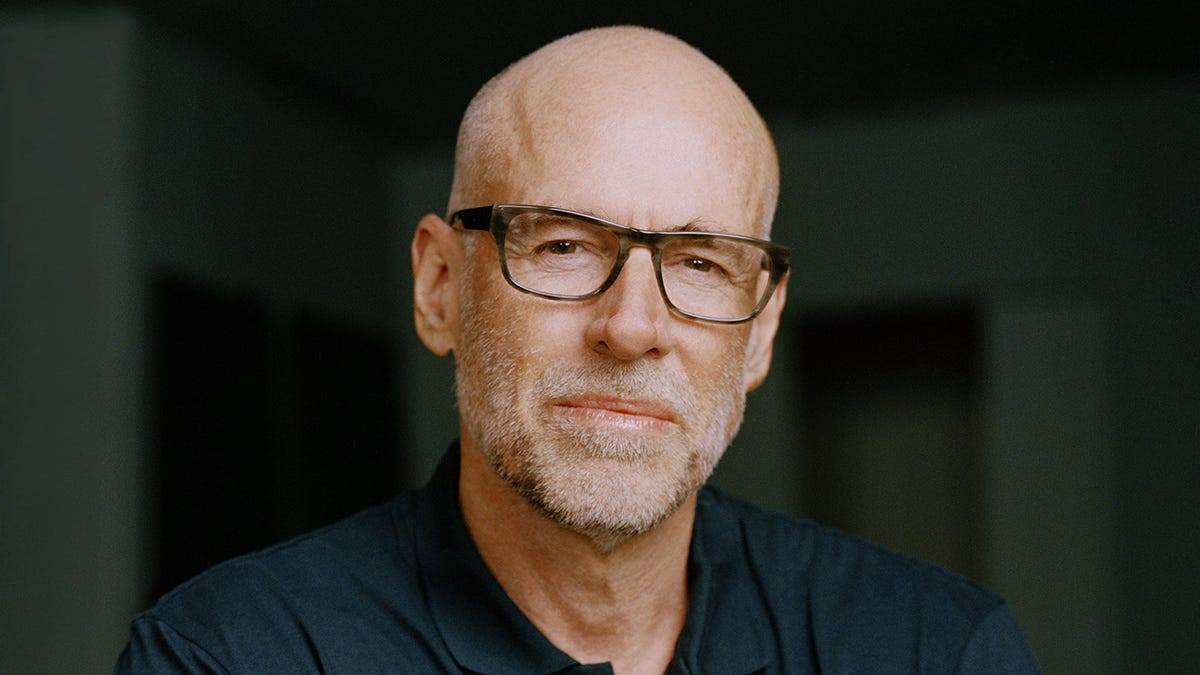
On the 17th of April 2024, Scott Galloway walked onto the TED stage in Vancouver and delivered what would become one of the most-watched talks of the year. He had 44 slides and 720 seconds. He called it “the great intergenerational theft.” Older generations, his argument went, had rigged the system through housing restrictions, asset inflation, pension entitlements and political capture, extracting wealth from young people who never had a fair chance to accumulate it. When he finished, the audience rose to its feet.
I watched it twice. I agreed with large parts of it. And it made me want to put my fist through the screen.
Because buried inside a genuinely important argument was a rhetorical move that does real and lasting damage. One that gives people permission to stop thinking, identify a group and say: them.
Where Galloway Is Right
Let’s be honest about this first, because Galloway deserves the fairness he doesn’t always extend to older people. His case is that today’s economic policies work to enrich older generations at the expense of younger ones. Housing costs have spiralled well beyond wage growth. The median home price has skyrocketed relative to median household income, with the average mortgage payment roughly doubling since the pre-pandemic period. Young people are carrying debt loads their parents never faced, in a labour market that no longer rewards loyalty or longevity the way it once did.
Galloway is a gifted communicator and a serious thinker. On the crisis facing young men, on the failures of higher education, on the grotesque concentration of power inside a handful of technology companies, he is frequently brilliant. You don’t get a standing ovation at TED by being wrong about everything.
But the word that does all the work in his argument, “Boomer,” is where things fall apart.
The Word Doing All the Damage
A generation is not a monolith. It is not a policy position or a bank account. It is a rough demographic bracket spanning two decades of human beings born into wildly different circumstances, different classes, different bodies and very different amounts of luck.
I work in aged care. I sit with people in their 70s and 80s who are navigating a system so convoluted it requires a translator, a navigator and occasionally something close to a miracle. Many of them are frightened. A lot of them are poor. None of them feel like they won anything.
When we say “Boomers are robbing the young,” we collapse a retired surgeon in Mosman and a pensioner in Blacktown into a single category of complicity. We treat a birth year as a moral failing.
According to ACOSS data, single people aged 65 and older have a poverty rate of 24.7%, almost identical to single people under 65, whose rate sits at 25.6%. The current ACOSS report puts the overall poverty rate for over-65s in Australia at 14%, almost exactly the same figure as for young Australians aged 15 to 24.
One in seven older Australians is poor. The cultural story we keep telling ourselves is that they are the ones who took everything.
Baby Boomers as a cohort hold 53% of Australia’s national wealth while representing about 25% of the population. That statistic is real and striking. But averages lie about distributions. When a cohort includes both a billionaire property developer and a 72-year-old woman renting in Penrith on the age pension, the average tells you almost nothing useful about either of them. The disparity within the Boomer generation is enormous. The people at the bottom of that distribution are not living well at anyone’s expense.
The Loneliness Nobody Talks About
Galloway has done significant work on loneliness, particularly among young men. It is a genuine crisis and he is right to name it loudly. But loneliness does not stop at a certain age and reverse.
Older adults are particularly prone to loneliness and social isolation due to significant life transitions including retirement, loss of partners and friends, declining health, transitions into care settings and increasing rates of living alone. Data from the Australian Institute of Health and Welfare indicates that those over 75 are more likely to be lonely than most other age groups.
These are not people living in clover at anyone’s expense. Many of them are isolated in ways that a generational war narrative does nothing to address and actively makes harder to see. You cannot simultaneously declare war on a generation and care about its most vulnerable members. Pick one.
The Oldest Con in Political Discourse
There is a name for what happens when you take a complex systemic failure and pin it on a demographic group. We have a long and undistinguished history of it, and it never ends well.
What makes Galloway’s version particularly frustrating is that it arrives wrapped in data and delivered with charm, which makes it feel like rigour when it is actually a story. A satisfying one, granted. Rage needs a face.
The inequality within generations is often as pronounced as the inequality between them. There are significantly more Australians above 70 now than there were in 1989. The Baby Boomers have simply aged, which means older Australians will hold a larger share of aggregate wealth regardless of whether individual behaviour has changed at all.
The real story is not that Boomers stole from Millennials. It is that capital beat labour. Asset owners beat wage earners. The already-wealthy benefited enormously from four decades of decisions about housing policy, taxation, monetary settings and superannuation, decisions made by governments of both stripes, driven by institutions whose interests transcend any birth cohort.
When we say “Boomer,” we let the actual architects of those decisions off the hook entirely. We fight across an imaginary generational line while the structural causes remain unreformed and largely undiscussed. It is, as political distractions go, almost elegant.
What Any of This Has to Do With You
One of the most persistent obstacles to ageing well is the story society tells itself about who older people actually are. For decades, that story has cast them as passive, as dependants, as people whose active contribution to the world is essentially complete.
Galloway’s framing adds a new and uglier chapter. Now they are not just passive. They are culpable.
Neither story is true. And neither helps you think clearly about the decades in front of you.
The enemy is not a generation. It is a system that fails people across their entire lives and a political culture that has learned to weaponise that failure rather than fix it. Blame is not a plan. It never was.
Thank you ,Adam, as always. Your own budget review ! Where will the money that is "saved" in tonight's budget go ? Not to the poor boomers who you describe so well.
Bravo Adam. This is an excellent and necessary piece. What matters here is the reminder that “Boomer” covers nearly two decades of people, from 1946 to 1964, whose lives were shaped by very different histories, opportunities, losses, geographies, and degrees of security. Treating that cohort as if it has one shared bank balance, one political interest, and one moral responsibility flattens the inequalities we need to understand.
I also think this framing risks making older people responsible for systems many did not design and many have not benefited from. The real question is not which generation to blame, but why we keep allowing political and economic systems to divide people who are often being failed in different ways by the same structures.